
The Verbatim Effect: Get the Gist?
How many of you have read something long and when asked about it can only recall the overall gist of details? We know that we have! This is called the verbatim effect and it is defined as a cognitive bias that causes people to only remember the gist of the information instead of its exact form. And, this isn’t limited to text. It extends to videos, photos, infographics, etc. So, how can brands use this to their advantage in marketing? People are skimmers.
How many of you have read something long and when asked about it can only recall the overall gist of details? We know that we have! This is called the verbatim effect and it is defined as a cognitive bias that causes people to only remember the gist of the information instead of its exact form. And, this isn’t limited to text. It extends to videos, photos, infographics, etc. So, how can brands use this to their advantage in marketing? People are skimmers. They don’t want heavy reads. We know we need catchy headlines, but the information in the article itself should be less precise and more how the article will make the readers feel. Deep details won’t matter if the readers aren’t going to remember that anyway. Create easy to remember snippets in the body of your content that are impactful. If you make them slightly different from the rest of it, it can stand out like a sore thumb. So, if you want people to remember more than the gist of the content, this is a good way to do so. As for the headlines, make sure they’re searchable and give the reader an acute representation of what they’re about to dive into. Sometimes the verbatim effect should be avoided. Say, in terms of your brand name or logo. Your brand will want people to remember this so repeating it in the content will help engrain this into the consumer’s subconscious mind. Repetition is key to overcoming the verbatim effect in marketing and advertising.
While Supplies Last: Scarcity Marketing Tactics
Why do we all want things that we can’t have? This is what the scarcity principle is based upon. Creating want for a product or service through limited accessibility. Things that seem rare are perceived to have higher value. Marketing uses this principle often to get customers to buy but there needs to be proof of scarcity, of course. Here are some examples of ways that marketing use scarcity.
Why do we all want things that we can’t have? This is what the scarcity principle is based upon. Creating want for a product or service through limited accessibility. Things that seem rare are perceived to have higher value. Marketing uses this principle often to get customers to buy but there needs to be proof of scarcity, of course. Here are some examples of ways that marketing use scarcity.
1. Limited-time offers: Just as it sounds, these promotions are limited time only with a clear beginning and end date. Can be as sales, discounts, free offerings, exclusive products/services and/or free shipping.
2. Flash sales: Great for letting current customers first to create a sense of rewarding them for their loyalty. These are last minute announcements that are available for a short amount of time.
3. Limited stock: You probably see these often and don’t even realize it. For example, when you add something into your Esty account and below it states, “there are only 5 left in stock to order soon.” This simply shows the number of items that are left in stock.
No matter which way you shake it, the scarcity principle works through creating a sense of urgency that will budge consumers to buy. However, that being said, it does have some drawbacks as does anything. You have to weigh out the pros and cons for your brand to see what the best way to implement the technique will be.
Here are the drawbacks:
1. Can take attention away from products: It’s important to make sure that the customers are happy with the product. If the value of the product is compromised, then it will hurt the brand’s reputation.
2. Causes pressure on consumers: this could push prospective customers away.
3. Won’t always mean your audience will grow: This principle may not work on all people. It taps into a specific type of psychological profile.
4. It can create a sense of trickery: Some see this as a form of dishonesty. Is the product really low in inventory? Let’s hope so because if not, you can lose your loyal customers.
Scarcity marketing can make your brand stand out from the others if done correctly. It gives the impression of popularity or exclusivity. While it’s a great tool to utilize, it’s key to remember not to use it excessively, be overly pushy , not to extend them and create products/services that always deliver.
Extra, Extra Read All About It: Press Releases
News spreads fast nowadays in the digital world we live in. Before the internet, the press release was used to reach a wider audience through sending them directly to journalist. The journalist would then publish in their newspapers to reach a large audience, but only if they deemed the releases to substantial enough to send out. With social media today, it doesn’t matter if anyone thinks your press release is subpar, it’s going to go out anyway. It has become a way for companies to reach their audience directly without the middle man so it’s important for brands to know how to use them strategically to benefit their marketing tools. There are some key elements to your release that you want to make sure you have as well as sending to the proper places. Aside from this you need to know why you’re creating it. Let’s start with that.
Extra, Extra Read All About It....
Extra, Extra Read All About It....
News spreads fast nowadays in the digital world we live in. Before the internet, the press release was used to reach a wider audience through sending them directly to journalist. The journalist would then publish in their newspapers to reach a large audience, but only if they deemed the releases to substantial enough to send out. With social media today, it doesn’t matter if anyone thinks your press release is subpar, it’s going to go out anyway. It has become a way for companies to reach their audience directly without the middle man so it’s important for brands to know how to use them strategically to benefit their marketing tools. There are some key elements to your release that you want to make sure you have as well as sending to the proper places. Aside from this you need to know why you’re creating it. Let’s start with that.
Some reason to write a press release:
1. Launching a new product/service
2. Hosting an event
3. Company mergers & new partnerships
4. Grand openings
5. Rebranding
6. Awards & Promotions
Now that you know why you’re writing the release it’s important to get the information out there in an effective manner. Let’s talk about some of the key elements that should be in the release.
1. Headline: This is your chance to catch the reader’s attention. It needs to be captivating and directly convey the point of the release. Font should also be bold and larger than the body text. Don’t be afraid to use action verbs here.
2. Dateline & Location: This is important to establish relevance
3. Introduction: Here you summarize your entire release into a few sentences. Most people will only read this and skim the rest.
4. Body: This is where you include your 5 W’s. Who, what, where, when and why. These should be conveyed in a clear, concise manner but sprinkled in with a little fun. Use statistics, quotes, charts, and images. Be honest and unbiased. This should be 2-3 paragraphs long.
5. Boilerplate: This is where the company information goes. The brand’s vision, founding info, etc. Describe what your company does clearly for those that may not know. Include CTA’s as well if possible.
6. Sign off: Contact details go here and ### to signify that the release has ended.
Now that we have the reason why your writing your press release and the elements it should contain, it’s time to publish. But first… people, please proofread your releases over and over yourself as well as having other eyes on it as well. They can catch things you may have missed. There’s nothing more embarrassing than sending out a release to the public that has typos and grammatical errors. Ok, so you’ve done that and now you’re ready for distribution.
1. Reach out to top journalist: Pretty straight forward. Reach out to journalists whom you might know or that may be interested in the release.
2. Cold pitch media outlets: Make a list of media outlets that may be interested and send them your release directly. Use a subject line to catch their attention.
3. Use a press release distribution service: Costs vary but can be useful if your company has the dough to throw around.
4. Don’t publish on the hour: Most companies schedule releases to go out on the hour, which means yours can get lost in the mix. Get nuts. Schedule it to go out at 10:06am instead of 11am.
5. Hire a PR pro: There are people that specialize in this area and can be useful for your team. They already have existing relationships with journalists and media outlets that your company can benefit from.
Once you have sent the release out it’s time to generate some buzz. Use content creators, influencers, bloggers, vloggers, etc. to hype up your release and what it’s all about. Schedule an interview. If you did your release right, someone might even contact you first for this. Make sure to share the stories that have been shared about you. No one wants to support and share things for a company that doesn’t reciprocate that. You want your release to be extra, extra so they want to read all about it!
Women’s History Month: Erma Perham Proetz
Erma Proetz was the first woman to be inducted into the Advertising Hall of Fame. She was a copywriter, account executive, director, creative vice president and executive vice president, who spent most of her advertising career at Gardner Advertising Company in St. Louis. She received multiple awards for her advertisements in the 1920’s.

Erma Proetz was the first woman to be inducted into the Advertising Hall of Fame. She was a copywriter, account executive, director, creative vice president and executive vice president, who spent most of her advertising career at Gardner Advertising Company in St. Louis. She received multiple awards for her advertisements in the 1920’s and in 1935, Fortune Magazine named her in the top 16 most outstanding women in American Business. For the time, this was quite a feat and a step in the right direction for women’s rights, well before the equality movement in the 60’s. She became the president of the Women’s Advertising Club of St. Louis in 1936 and served as chair(wo)man of the Council of Women’s Clubs of the Advertising Federation of America. Needless to say, she was quite the powerhouse during her time before she passed in 1944. Quite an impressive resume for the time she was alive as a woman living in a man’s world before women had equal rights. She was inducted into the Advertising Hall of Fame in 1952.
Women's Role in Advertisements Today
In 2022, 46.6% of the workforce in the United States was female (Mathew Zane of Zippia). That’s almost half of the entire workforce! So, why then are women still being portrayed in a stereotypical manner in advertisements? A recent article written by The Drum shows that stereotyping women in advertisements has actually went up in the past year by 66%. What’s going on? Are we not in the progressive 21st Century? On top of this fact, women of darker skin tones have been featured 80% less than women with lighter skin.
In 2022, 46.6% of the workforce in the United States was female (Mathew Zane of Zippia). That’s almost half of the entire workforce! So, why then are women still being portrayed in a stereotypical manner in advertisements? A recent article written by The Drum shows that stereotyping women in advertisements has actually went up in the past year by 66%. What’s going on? Are we not in the progressive 21st Century? On top of this fact, women of darker skin tones have been featured 80% less than women with lighter skin. Sometimes it seems we’re taking a step forward and then we take two steps back in terms of equality. These numbers have to change and it has to be done within the industry as a whole. The advertising industry professionals are considered the “cultural intermediaries” who develop messages. A survey done by Megan Sullivan-Jenks, Director of Marketing & Communications at Choozle, shows that 37% of respondents agreed that the ad industry has a responsibility not to use gender stereotypes. There are two schools of thought on the role of advertising to society. The first is the “mirror” role that suggests that advertisements are merely a reflection of society’s values that already exists and are dominant. The “mold” argument states that people will incorporate stereotypes presented by media into their own value and beliefs system. We think it is safe to say that both are true. The role of advertising professionals should come with responsibility to empower women, not stereotype them into roles of nonprofessionals or submissiveness.
Getting Up Close & Personal with Gen Z
Gen Z… they crave success. It will be important to understand them in the upcoming years as they come of age and will be the audience that brands are marketing to, if they aren’t already. Let’s talk about their top 3 priorities in life. 1. Clothing and fashion choices. 2. Making money. 3. DEI. Well, this third is as important for society as number one is, isn’t? it’s also important to note that this generation is still young and their priorities may change over time as they age. What are they interested in?
Gen Z… they crave success. It will be important to understand them in the upcoming years as they come of age and will be the audience that brands are marketing to, if they aren’t already. Let’s talk about their top 3 priorities in life. 1. Clothing and fashion choices. 2. Making money. 3. DEI. Well, this third is as important for society as number one is, isn’t? it’s also important to note that this generation is still young and their priorities may change over time as they age. What are they interested in? 1. Influencers. They actually aspire to be influencers one day. It’s weird to think that when they’re asked what they want to be when they “grow up” that answer could be an influencer. 2. Coding/programming. This one will be very useful as technology continues to advance so good job on this one Gen Z! 3. Esports. Again, wow… but this is competitive video game playing and can actually come with a large paycheck nowadays through sponsorships etc. Now, where does Gen Z hang out on social media? Their preferred platform isn’t surprising, TikTok. Their second favorite is Instagram and their least used is Facebook. Looks like Facebook is for old folks now…
We recently did a post on how social media may become the new search engine. Gen Z proves this trend could be the future. When it comes to brand discovery, their top method is through vlogs. This is followed by endorsements by celebrities, and ads seen in the cinema. When they conduct online research their go to is micro-blogs, vlogs and video sites. This only solidifies our theory that social media will be a new form of a search engine sooner than later. When it comes to brands they support, there are a few top reasons why they choose one brand over another. The top reason is that it will enhance their online reputation. Second, they like access to exclusive content and feeling like they’re taking part or being involved. They want brands who are inclusive and bold. Brands that aren’t afraid to take stands on socioeconomic issues. Lastly, they love love love memes. I mean, who doesn’t at this point? This is basically how I speak to my sister instead of actual text messages now. We speak via meme. Gen Z is actually more than twice as likely to be following memes or parody accounts than the average American, according to GWI. When I look at this generation, I just think of our grandparent’s saying, “kids nowadays.” But we must understand that they’re growing up in an era that is very different from the others. Technology has advanced quickly and to new heights, where social media is part of everyday life. They also grew up a few years living life remotely in the COVID-19 pandemic. Some graduated high school this way. This generation will have much to offer in the future in terms of environmental improvements as well as DEI efforts. They have the power to create a better world than it was when they came into it. So, when it comes to marketing to this group successfully, it will be crucial to understand what makes them tick.
(All data sourced from GWI’s Report on What’s Trending with US internet Users Aged 16-25)
Making the Right Impression: Impression Shares
What is an impression share? If you’re in business that advertises you probably already know but for those that don’t, it’s the percentage of impressions that your ad receives compared to that total number of impressions it could get. It gets this through comparing it to other ads in a similar category. It’s calculated by dividing the number of impressions gotten by the number it has available. The available impressions are determined by things such as targeting settings, approval status and quality, according to Google. There are also different types of impressions shares, such as search, exact match, display impression share, etc.
What is an impression share? If you’re in business that advertises you probably already know but for those that don’t, it’s the percentage of impressions that your ad receives compared to that total number of impressions it could get. It gets this through comparing it to other ads in a similar category. It’s calculated by dividing the number of impressions gotten by the number it has available. The available impressions are determined by things such as targeting settings, approval status and quality, according to Google. There are also different types of impressions shares, such as search, exact match, display impression share, etc.
1. Search impression Share: Group of search-related websites where your ads can appear. This includes Google apps, Google search results and partner websites. This one can affect the brand budget.
2. Display Impression share: Display Network of over 2 million websites that reach up to 90% of people on the web. Can increase ad placements to show ads in particular context or to target audience.
3. Search Lost Impression share: percentage of impressions that you’re missing out on because of the budget.
4. Exact Match Impression Share: compares the impressions received versus how many it was eligible for.
5. Target Impression Share: Automatic approach to bidding on ads.
So, why are any of these impression shares important? Well, it can give you an idea of why keywords are working or not. If your impression share isn’t coming back with those positive numbers your brand was looking for, don’t fret because there are ways to improve them. You can adjust the geotargeting setting by decreasing the area that will serve your ads to a smaller audience. Second, you can improve on ad quality. Getting the right impression shares is important to gauging your ad performance in order to improve it in real time. Maximize profits through efficient effort! We can help with this by providing all of your found content needs!
Women’s History Month: Women Who Changed Advertising Mathilde C. Weil
It’s hard to believe that the first advertising agency was started by a woman in 1880 but it’s true, despite her not getting credit since she was a woman. The agency was M.C. Weil Agency in New York. In the history books, J. Walter Thompson gets all the credit for starting the first ad agency but this is false. She moved to America from Germany in the early 1870’s and worked as a translator. She spoke English, German, French and Spanish. She later worked as a writer for a newspaper and magazines. This led her into advertising when she began selling ad space for a German newspaper. From there she became a liaison for advertisers and publications as she ran her own agency out of the NY Time Building until she died in 1903.

It’s hard to believe that the first advertising agency was started by a woman in 1880 but it’s true, despite her not getting credit since she was a woman. The agency was M.C. Weil Agency in New York. In the history books, J. Walter Thompson gets all the credit for starting the first ad agency but this is false. She moved to America from Germany in the early 1870’s and worked as a translator. She spoke English, German, French and Spanish. She later worked as a writer for a newspaper and magazines. This led her into advertising when she began selling ad space for a German newspaper. From there she became a liaison for advertisers and publications as she ran her own agency out of the NY Time Building until she died in 1903.
Creativity & Working from Home
We read an interesting article in Adage yesterday about how remote work may be hurting creativity in the workplace so we decided to delve into this idea a little deeper. Creative collaboration can push projects to the next level, but does it matter if these collaborations are in person or digital? Some say that those stating creativity is suffering from at home work is just a cop out for the uncreatively bad work they’ve produced, but could it actually be true? Well, a study was done on this and the results are very convincing. According to this article from CNN, results showed that digital meetings can actually drain creativity and that it is actually easier to come up with creative ideas in person. This is how it was determined.
We read an interesting article in Adage yesterday about how remote work may be hurting creativity in the workplace so we decided to delve into this idea a little deeper. Creative collaboration can push projects to the next level, but does it matter if these collaborations are in person or digital? Some say that those stating creativity is suffering from at home work is just a cop out for the uncreatively bad work they’ve produced, but could it actually be true? Well, a study was done on this and the results are very convincing. According to this article from CNN, results showed that digital meetings can actually drain creativity and that it is actually easier to come up with creative ideas in person. This is how it was determined. The college study used 602 participants and divided them into pairs. They were given every day things and asked to come up with new and creative ways to execute them. Some of the groups were virtual and some were in person. Performance was measured on how many ideas they came up with, the novelty of those ideas and value of the ideas, which was ranked by other students. Eye tracking software was also used and they found that the virtual groups spent more time looking directly at their partner on the screen. Those that were in person gazed around the room more. Also, the virtual pairs remembered less about their surroundings when asked about it later. This suggests that the virtual space narrows cognition and narrows focus that can inherently hurt creative formulations.
It’s not surprising that remote work could hinder creativity since part of creative inspiration comes from in-person collaboration. 68% of employees say that they have found communication with colleagues more difficult while working remotely (CROOW). Less in person engagements at the office equals weaker relationships between employees. One could see why less collaboration happens with at home work. The need for collaboration IRL is key for creativity. It promotes things, such as brainstorming, story-telling, open-mindedness and active listening all hone in on the creative mind. It also allows for a more open-ended focus that is necessary to get in the creative head space. At Locomotive we love remote work and encourage it. That being said, our team already knew each other and had many in person interactions before they went fully remote, so their employee bonds were already awesome. The concept of remote work is fairly new since the pandemic and we think there are benefits to both. However, we believe that there should be some in-person meetings every week in order to promote relationships and collaborations between employees, especially if the field is creative in nature and the employees are still getting to know one another.
Electric Lead Magnets
If you’re in any industry we probably don’t have to tell you what a lead magnet is. They’re a great way to offer some value for potential customers in exchange for their email. This helps you grow your database and your business. There are a few ways to go about creating a lead magnet for your brand that include eBooks, whiteboards, coupon codes, case studies, cheat sheets and/or newsletters. It’s important that your lead magnets do a few things in order to attract your audience. Here are some ways to create a killer lead magnet that people won't be able to resist.
If you’re in any industry we probably don’t have to tell you what a lead magnet is. They’re a great way to offer some value for potential customers in exchange for their email. This helps you grow your database and your business. There are a few ways to go about creating a lead magnet for your brand that include eBooks, whiteboards, coupon codes, case studies, cheat sheets and/or newsletters. It’s important that your lead magnets do a few things in order to attract your audience. Here are some ways to create a killer lead magnet that people won't be able to resist.
1. Make it engaging. Creating an enticing topic for your audience will ensure that they cannot resist clicking on your offer. Depending on the industry it can be a discount code, access to exclusive content or a sample. It has to be valuable enough to them to give their email.
2. Provide value. This one is the most important and should be a given. Try to help your audience solve a problem. This will also depend on where your customers are in their buying journey. You need to understand your audience in order to do this.
3. They’re sharable. Be sure to include sharing links! The more people that are able to share it the better. Word of mouth marketing is always the best kind.
4. Position yourself as a brand authority. If you’re using a newsletter or eBook, this is an opportunity to show your expertise in your industry. Providing high quality information will show potential customers that you are the top at what you do.
Now that you understand what goes into making a good lead magnet let’s talk about ways to get potential customers to that said content. First, my favorite… quizzes. I can almost never turn down a quiz to learn something about myself. This is considered gamification to attract leads to your content. In order to complete the quiz, the reader must provide their email to send their results. Second, widgets are used on website for lead generation. Some offer a service, report as well as other types of information that’s difficult to get elsewhere. They provide their email for in exchange for that information and you get to keep that email for future promotion. Lastly, there’s a few types of content bait, such as video content, infographics and text content (case studies, how to guides). There are more types of lead magnets but we’ll just stick to a few here. A good lead magnet will create a strong bond that will last longer if done correctly.
Black History Month: The Colored American Magazine
When I searched for the first Black American magazine, Ebony came up. This is the first POC magazine in the United States that achieved national publication. However, The Colored American Magazine was the true first monthly publication in the U.S. and it built the market for future magazines, like Ebony. it was created in May of 1900 and ran until November of 1909 out of Boston. It
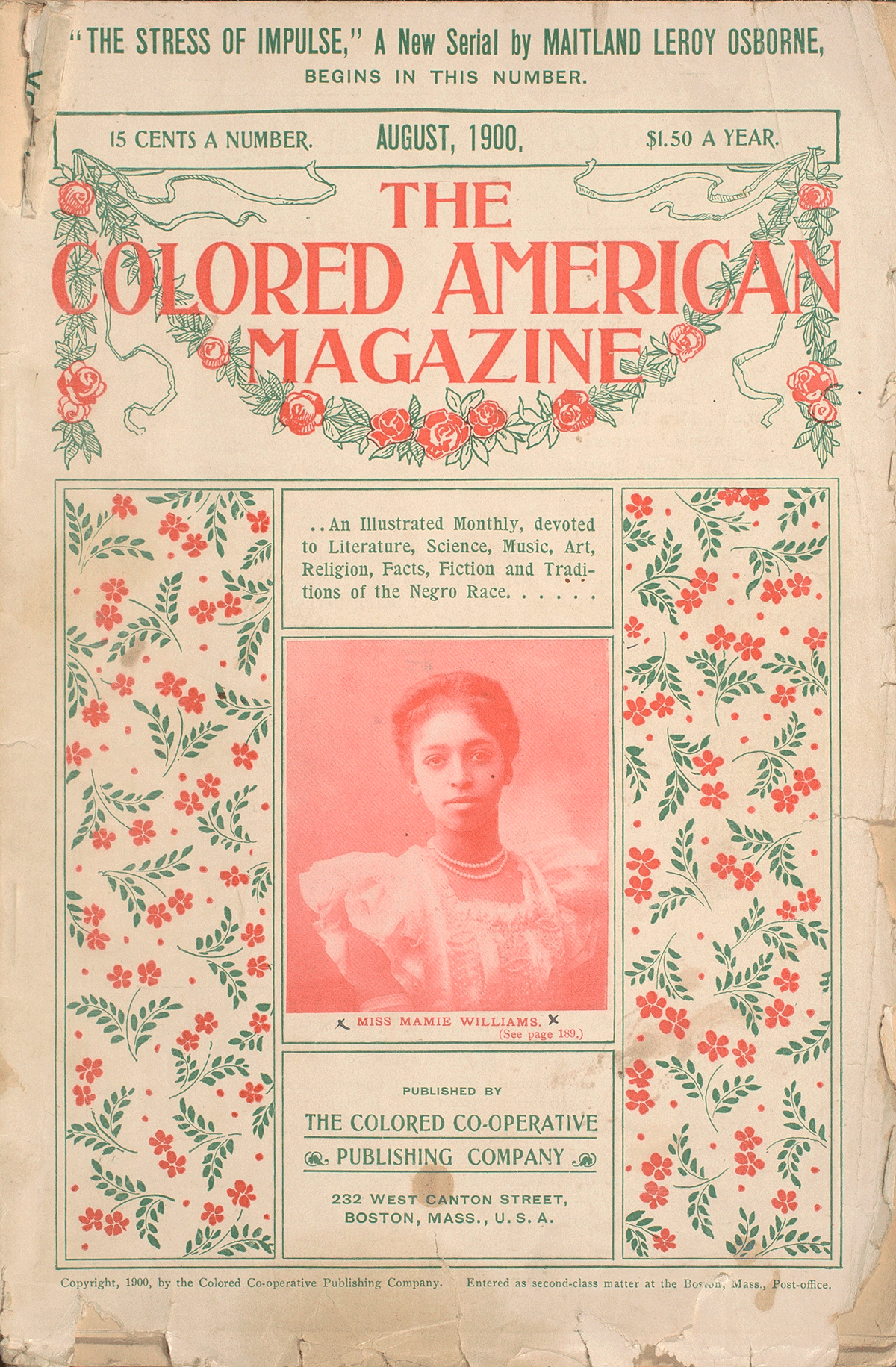
When I searched for the first Black American magazine, Ebony came up. This is the first POC magazine in the United States that achieved national publication. However, The Colored American Magazine was the true first monthly publication in the U.S. and it built the market for future magazines, like Ebony. it was created in May of 1900 and ran until November of 1909 out of Boston. It was founded by Harper S. Fortune, Walter Alexander Johnsons, Walter W. Wallace and Jesse W. Watkins who all hailed from deep south Virginia. Their mission was to write about black Americans succeeding in business, art, education, medicine, etc. and who were devoted to the culture in regard to religion, literature, science, music and art. What is pleasantly surprising is that at the time at least 1/3 of the readers were white, although the magazine was targeted to POC. The magazine was known for portraying the lives of the black American through their own voices in stories, poems, essays, and novels. They were also the first to publicly called out white Americans for doing nothing around issues surrounding hate crimes, such as lynching in the south at the time. They called for repealing racist laws such as the 15th Amendment and spoke up on voting choices. It’s unfortunate that the publication had financial issues from the get-go and went under. However, the entire publication has been digitized and can be viewed at Coloredamerican.org. It’s obvious how and why they set the tone for magazines to come!
Social Media Demographics 2023
Well, we’re almost two full months into 2023 and let’s be honest, the social media space changes frequently so it’s important to keep up with what’s going on and who’s getting on which channels and platforms. We did some research to see who’s hanging out where so far this year and this is what we found.
Well, we’re almost two full months into 2023 and let’s be honest, the social media space changes frequently so it’s important to keep up with what’s going on and who’s getting on which channels and platforms. We did some research to see who’s hanging out where so far this year and this is what we found.
56.4% are male and 43.6% are female (Statista)
Gen X and Boomers favorite social platform (HubSpot Blog Research)
Dominated by males ages 18-24 (Statista)
Women are between ages 18-34
Highly dominated by men. Only 43.6% are female (Statista)
TikTok
62% is Gen Z
21.5% females between ages 18-24. Males are between 18-24 as well (Statista)
Most users are 18-19 years old, followed by 20-29 (Statista)
YouTube
Equally popular between Gen Z, Millennials and Gen X (HubSpot Blog Research)
¼ of U.S. adults get their news from this platform (Pew Research Center)
43.6% of global users are female and 56.4% are male (Data Reportal)
60% are between the ages of 25-34 (Data Reportal)
Could Procrastination Be Part of the Creative Process?
Leonardo da Vinci, Steve Jobs, Frank Lloyd Wright, J.K. Rowling. What do all of these people have in common? They’re all procrastinators. We usually see procrastination as a negative trait but there are new studies showing that it may actually help with the creative process. We’ve done some research and the common theme is that medium, productive or active procrastination is linear with higher creativity. All of those terms mean the same thing. Let’s go back to our previous creativity article where we talked about the different kinds of creativity.
Leonardo da Vinci, Steve Jobs, Frank Lloyd Wright, J.K. Rowling. What do all of these people have in common? They’re all procrastinators. We usually see procrastination as a negative trait but there are new studies showing that it may actually help with the creative process. We’ve done some research and the common theme is that medium, productive or active procrastination is linear with higher creativity. All of those terms mean the same thing. Let’s go back to our previous creativity article where we talked about the different kinds of creativity. Mozart said he had melodies just come into his mind while he would be doing a random task, such as eating dinner out somewhere. He would then whistle them until he would get home and was able write them down. He wrote, “It seems to me impossible to say whence they come to me and how they arrive; what is certain is that I cannot make them come when I wish.” Oh, he was a major procrastinator according to the history books too by the way. What he is describing here refers to the spontaneous and cognitive creativity, where one has those big “Eureka Moments,” where the unconscious mind takes over and solves something for you. It typically happens when doing some mundane task.
Now, let’s circle back to the idea of procrastination. When we think of procrastination, we think of it in the traditional sense where one is lazy and just waits until the last possible minute to get something done. This is also known as passive procrastination and it should be noted that it differs from active procrastination, according to a scientific study published in Science Direct. Active procrastination is defined here from the psychological characteristics that differ from passive procrastination. Active procrastinators are those who prefer time pressures, intentionally decide to procrastinate, have the ability to meet deadlines and are satisfied with the outcomes of their decisions. This type of procrastination requires time to reflect on the work you’re doing or maybe not reflect on it at all. This allows the unconscious mind to run amuck and give you all the creative answers you’re looking for. According to a study done by psychologist Benjamin Baird in 2012, periods of short breaks that involve some engagement with an undemanding task can actually increase creativity up to 40%. This indicates that after beginning a task one should take a short break where they do some easy task. Doing nothing lets the mind wander too much and doing a demanding task doesn’t allow for it to wander at all. Distraction in moderation is key for productive procrastination. Hence, why people find the creative answers they’ve been looking for when they’re folding the laundry.
So, what if we reframed the idea of procrastination and turned into a positive one? Can it can be harnessed as part of the creative process as a whole? Can it be use it to your creative advantage? We think so. The next time you begin a project, try to use this productive procrastination as a tool to advance your creativity.
Blog Writing AI: A test
We’ve been wanting to try out this new blog writing AI since it’s all the rage right now. We don’t plan on endorsing it since it’s quite new and there are concerns around plagiarism. That being said, we told it to write us a blog on the benefits of using user-generated content in advertising and this is what it spat back out at us.
We’ve been wanting to try out this new blog writing AI since it’s all the rage right now. We don’t plan on endorsing it since it’s quite new and there are concerns around plagiarism. That being said, we told it to write us a blog on the benefits of using user-generated content in advertising and this is what it spat back out at us.
Harnessing the Power of User Generated Content to Increase Advertising Revenue
User-generated content (UGC) is one of the most powerful tools available to marketers and content creators today. By leveraging the power of UGC, businesses can increase their brand visibility, drive more traffic to their websites, and even increase their advertising revenue. In this blog post, we'll explore how businesses can harness the power of UGC to their advantage.
Benefits of Utilizing User-Generated Content Advertising Revenue
Utilizing user-generated content for advertising revenue can provide unique opportunities to engage with potential customers in an authentic, trustworthy way. Consumers are becoming increasingly aware of sourced content, making user generated content a compelling option for businesses to attract customers. This type of content gives companies an avenue to create meaningful connections with potential customers, as it emphasizes trust and authenticity. User-generated content also has more credibility than sourced content that is generated solely by the company and can be used to connect with audiences in an impactful way. By integrating user-generated content into their advertising campaigns, companies can create engaging experiences for their potential customers and gain a competitive edge in the marketplace.
Additionally, by allowing users to share their stories and experiences with your brand, you can tap into a wide market of highly engaged viewers through the power of word of mouth marketing. User-generated content (UGC) is an invaluable tool for businesses, as found content can be used to create a positive reputation and increase customer engagement. It is considered to be more trustworthy than traditional marketing, as it comes from real users and their own experiences. Furthermore, by allowing customers to review products and services or participate in online conversations, businesses can establish credibility and trust with their customers. All of this helps build customer loyalty, which can drive long-term success and profitability.
Finally, user generated content can also help create a stronger connection between your brand and customers, as they’ll be able to see how others are using and enjoying your product in real-time Thus, UGC is a powerful tool in any marketing strategy. UGC provides insights into customer behavior and preferences, as well as helping to create reach and engagement. UGC also helps to build trust and loyalty, as customers are likely to be more engaged with content generated by real people rather than by businesses. Most importantly, UGC enables a stronger connection between the brand and customers, as users can see how others engage with the product in real-time. UGC is therefore an invaluable asset for companies looking to grow their customer base and stay ahead of competitors.
Leveraging Strategies for Maximizing UGC Ad Revenue
Leveraging strategies to maximize UGC ad revenue can be a great way to increase your website's income. To start, creating an effective ad placement strategy that allows UGC content to be placed in a prominent but unobtrusive way can help draw viewers' attention. It is important to consider the page layout, user experience, and overall aesthetics of the website when placing UGC ads. Additionally, allowing users to customize their ads and targeting users in the right demographic can help increase engagement with the UGC content. Finally, using sophisticated analytics to track user engagement and measure ad performance can provide valuable data that can be used to optimize your UGC ad strategy. By developing a comprehensive plan to maximize UGC ad revenue, it is possible to maximize income from your website.
Additionally, utilizing a platform such as Google Ads that provides detailed analytics will help ensure your UGC ads are performing optimally and yielding the highest return on investment. With this data in hand, you can then make small changes in order to improve the performance of your ads and maximize your UGC ad revenue Moreover, user generated content (UGC) can be an extremely powerful tool for any business. Utilizing a platform like Google Ads to monitor detailed analytics of your UGC ads will help you ensure you are getting the most out of your ad campaigns. This data allows you to make tweaks and adjustments to your ads in order to increase their performance and maximize their return on investment. By embracing the power of UGC, businesses can make the most out of their advertising campaigns and benefit from increased exposure and increased revenue.
Wrapping Up
In summary, user-generated content can be a powerful and effective tool for businesses who want to increase their brand visibility, drive more traffic to their websites, and increase their advertising revenue. Utilizing the power of UGC can enable businesses to engage with their customers in a positive way, create meaningful connections with their target audiences, and ultimately achieve the desired results. By harnessing the power of UGC, businesses can reap the rewards of increased advertising revenue with minimal effort.
We found this to be very interesting and wanted to share with all of you. However, that being said, your own sufficient research is required in order to determine whether or not your business wants to leverage this tool. We’ve done ours and decided it’s not for us. We prefer to let the humans do our writing for us. With trust issues between brands and consumers we feel that the human element in writing is important, with all of our errors and quirks. There’s just something about us, that machines cannot and will never be able to replace!
De-Influencing
It seems that the forecast for trending influencer marketing uptick in 2023 may be fiction more than fact. We’ve reported that it may be trending upaward this upcoming year through our research, but with economic uncertainty on the rise, that may not be true at all. Everyone in the U.S. has been more cautious with their spending habits and has increased their scrutiny over “influencer authenticity.” This became a recent reality when a popular creator was accused of wearing fake eyelashes to promote L’Oréal mascara. Our favorite part of this scandal is that it has been coined “Mascaragate.”
It seems that the forecast for trending influencer marketing uptick in 2023 may be fiction more than fact. We’ve reported that it may be trending upaward this upcoming year through our research, but with economic uncertainty on the rise, that may not be true at all. Everyone in the U.S. has been more cautious with their spending habits and has increased their scrutiny over “influencer authenticity.” This became a recent reality when a popular creator was accused of wearing fake eyelashes to promote L’Oréal mascara. Our favorite part of this scandal is that it has been coined “Mascaragate.” We love a good pun… When influencers are paid for their reviews by certain brands, it raises questions over the authenticity of their reviews and promotions. Rightfully so! We find it hard trust anyone who was paid by a company to give me a review on a product or service. Would they tell me if the product sucked? Probably not. Influencer marketing worked in the past because their reviews were true to their opinions without any influence from particular companies. Therefore, something that created trust at the birth of the influencer was their negative reviews on any given products/services. This is actually the concept of de-influencer. De-influencer is defined as the act of telling followers what not to buy. This could be a way to bring trust back into the brand to audience gap but there are still issues here. Even if an influencer says use this and not that, are they being paid by the brand who they’re telling people to use? Gen Z’s trust in influencer marketing has been waning quite a bit since the end of 2022. There is a heightened need for authenticity.
While we don’t have all the answers, but we do think that investing in micro-influencers and regular people is where this road will lead. Found content is going to be that pot of gold at the end of the metaphorical rainbow. Investing in real people to connect authentically with people is where it’s at. It makes sense. Brands collaborating with micro-influencers whose audiences’ see as more trustworthy is another solution to this connection problem. It’s time to start fixing the trust issues with good content and transparency!
Black History Month Influential People in Advertising: Tom Burrell
Tom Burrell was one of the first black men in advertising in the 1960’s. He first broke into the ad industry at Wade Advertising in Chicago, worked his way up to junior editor and then moved on to Leo Burnett and many more before founding Burrell Communications in 1971. His mantra was/(is), “black people are not dark-skinned white people.” His message was similar to Vince Cullers

Tom Burrell was one of the first black men in advertising in the 1960’s. He first broke into the ad industry at Wade Advertising in Chicago, worked his way up to junior editor and then moved on to Leo Burnett and many more before founding Burrell Communications in 1971. His mantra was/(is), “black people are not dark-skinned white people.” His message was similar to Vince Cullers where agencies should be marketing to black Americans through their culture. He worked with massive companies,such as McDonalds and Coca-Cola to change their messaging to a more relevant one. In 2005 he was inducted into the American Advertising Federation’s Advertising Hall of Fame and the New York Festival’s Hall of fame more recently. He’s also the author of, “BRAINWASHED: Challenging the Myth of Black Inferiority about the power that messaging plays in attitudes toward race-related issues. He is a visionary and leads the movement to positively change media messaging about black culture. Cheers to you Tom!
ChatGTP: Pros & Cons of Linguistics Artificial Intelligence
ChatGTP is one of the hottest topics right but what is it? It’s a conversational artificial intelligence chat bot. this is a natural language processing tool that uses the internet to answer search questions, compose emails, write blogs in a conversational style. Let’s talk about some of the pros and cons of this system.
ChatGTP is one of the hottest topics right but what is it? It’s a conversational artificial intelligence chat bot. this is a natural language processing tool that uses the internet to answer search questions, compose emails, write blogs in a conversational style. Let’s talk about some of the pros and cons of this system.
PROS
1. Speed up drafts of emails, blogs, product descriptions and code
2. Can help humans with inspiration for topics
3. Sources information from the web faster and more in depth than humans
4. Automate mundane tasks like data entry
CONS
Can be inaccurate and/or outdated information
All ChatGTP data is from 2021
Tries to understand user intent but may not provide the correct answers on more complex topics
Plagiarism
ChatGTP can provide every convenience but does come with its disadvantages. I think one of the biggest thing people are worried about are these AI systems taking over jobs. As for now, there’s no chance that this could happen with this AI technology due to the flaws it still clearly has. For our industry, we like to see this as an extra tool to assist current teams in advertising and marketing to help streamline their process. ChatGTP can be seen as an addition to and not as a threat.
Super Bowl 2023 Advertisement
We’re sad that there weren’t more found content campaigns in this year’s Super bowl commercial spots. The Super Bowl is one of our proudest moments here at Locomotive! The Discover Card campaigns, “Yes & No” aired during the Super Bowl a few years back that we helped source and license content for. That being said, there was one ad this year that stood out to us as relatable and funny. This type of ad falls under the found content space that we deal in and that was, “Football Cat.”
We’re sad that there weren’t more found content campaigns in this year’s Super bowl commercial spots. The Super Bowl is one of our proudest moments here at Locomotive! The Discover Card campaigns, “Yes & No” aired during the Super Bowl a few years back that we helped source and license content for. That being said, there was one ad this year that stood out to us as relatable and funny. This type of ad falls under the found content space that we deal in and that was, “Football Cat.” In our industry of user-generated content we often deal with viral memes or viral videos. This video went viral of a cat playing the keyboard 15 years ago and was originally published under Charlie Schmidt and now represented by our friends over at A Weird Movie. Shout out to Ben Lashes! Since then, it’s had 1.5M views and now that it has been used in the commercial, we’re certain that number has climbed. This is our favorite clip of the Super Bowl advertisements this year although we hope to be part of any future user-generated content campaigns for the Super Bowl. We’ve been seeing that most of the ads didn’t reach their audiences liked they hoped they would. Found content would change that. Let’s connect with audiences on a deeper level through found content!
How to Create a Focus Group for Company Data
Focus groups are an important research tool for agencies in understanding their audience. They can be done to be aware of demographics, psychographics and behavioral patterns of their customers. This information can be obtained through surveys but a focus group provides the brand with a deeper understanding of their consumer. That being said, it’s important to ask the right questions when you want to get specific information. Here are some tips to coming up with the right questions for your research.
Focus groups are an important research tool for agencies in understanding their audience. They can be done to be aware of demographics, psychographics and behavioral patterns of their customers. This information can be obtained through surveys but a focus group provides the brand with a deeper understanding of their consumer. That being said, it’s important to ask the right questions when you want to get specific information. Here are some tips to coming up with the right questions for your research.
Use open-ended questions: Some examples would include. What do you think about…? How do you feel about …? Where do you get new information about….? What do you like best about…?
Avoid dichotomous questions: these are questions that can be answered with yes and no. These types of questions will not help you gain much insight into the group.
Why questions are rarely used. keep in mind that why is a rarely used question but can sometimes be relevant depending on the goal of the focus group. For example, it can be used in a follow up situation such as, do you feel that the price matches the value? Why?
Limit questions: No one wants to be there all-day answering questions. Keep them concise and on topic.
Use different types of questions: there are five types
Opening
Introductory
Transition
Key
Ending
Ask questions that get participants involved: a good question here would be to use “think back” questions that take people back in reflection of their choices.
These tips will help your focus group team come up with good questions that will gain a deeper understanding of the group. When creating the questions, it’s important to vary the way in which the group will answer. Here are some ideas for question strategies.
1. Give them a list of alternative answers
2. Fill in the blank
3. Ask them to make a list
4. Rate something from 1-10
5. Fantasy questions (Think back or what if)
6. Role playing questions
7. Ownership questions (What do you do?)
8. Paint a picture question
When creating the questions for the focus group, it will be important to start general and get more specific as you go. Be very clear with wording and goals of the group. Make sure to end the focus group with closing questions, such as, of all the things asked today, which was most important to you? Are there any topics we did not ask about that you feel is relevant? A focus group will really help your brand get to know your audience on a deeper level and better suit their service/product needs. People want to be met where they are at. Personalization is the expectation not the exception.
Black History Month: Influential People
In honor of Black History month this month, every Friday we will be posting a new blog on black history within the advertising industry. Our first blog will highlight Vince Cullers. In 1956, he founded Vince Culler Advertising, Inc. after graduating from Art Institute of Chicago and tirelessly trying to land a job at multiple agencies. This was at the height of the Civil Rights movement and it was the first black-owned advertising agency. It would change history through his two goals:

In honor of Black History month this month, every Friday we will be posting a new blog on black history within the advertising industry. Our first blog will highlight Vince Cullers. In 1956, he founded Vince Culler Advertising, Inc. after graduating from Art Institute of Chicago and tirelessly trying to land a job at multiple agencies. This was at the height of the Civil Rights movement and it was the first black-owned advertising agency. It would change history through his two goals: open up advertising to African-Americans and change the way African-Americans were targeted in advertising. His vision innovated ads that spoke to the black community through messaging that would resonate with them. Since no other black owned agencies existed at the time, he became a mentor in the advertising space, where he inspired other agencies to form and trained employees in the ad space. He made bold advertisements that catered to the black community and eventually his business grew so large it made it on the Forbes list in 1990. He would go down in the advertising hall of fame as a trailblazer in the field after his passing in 2003.